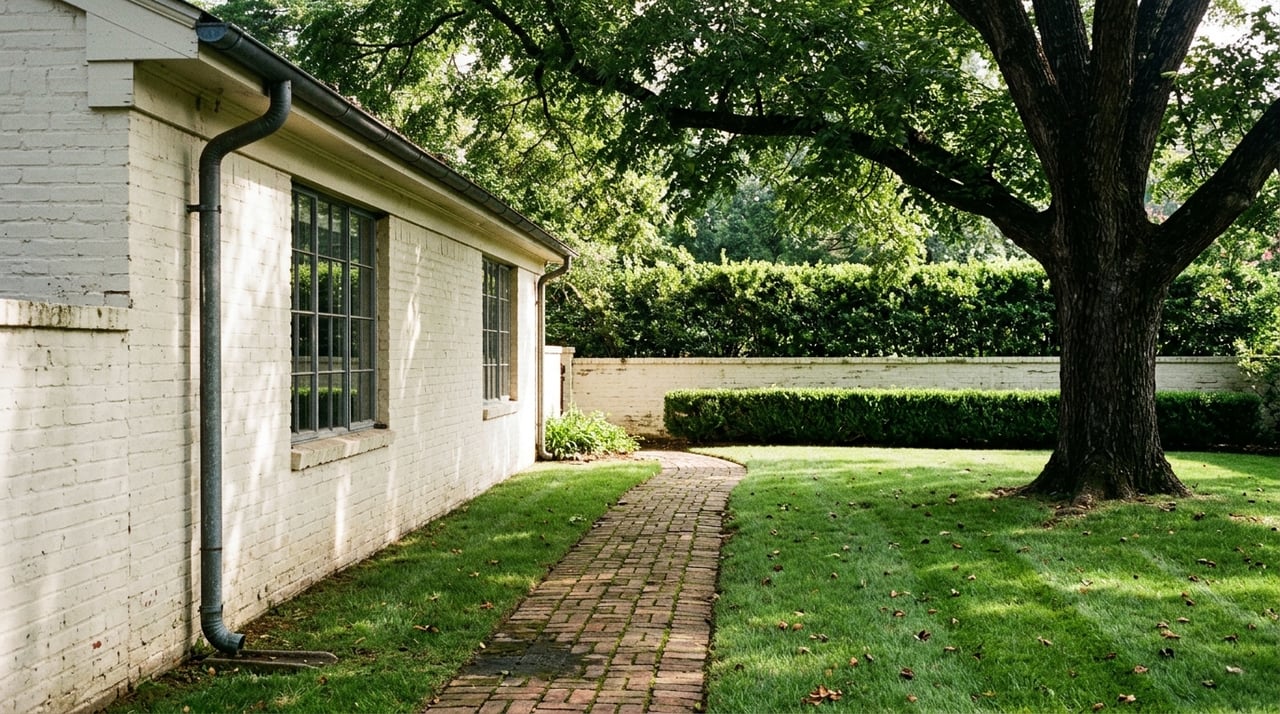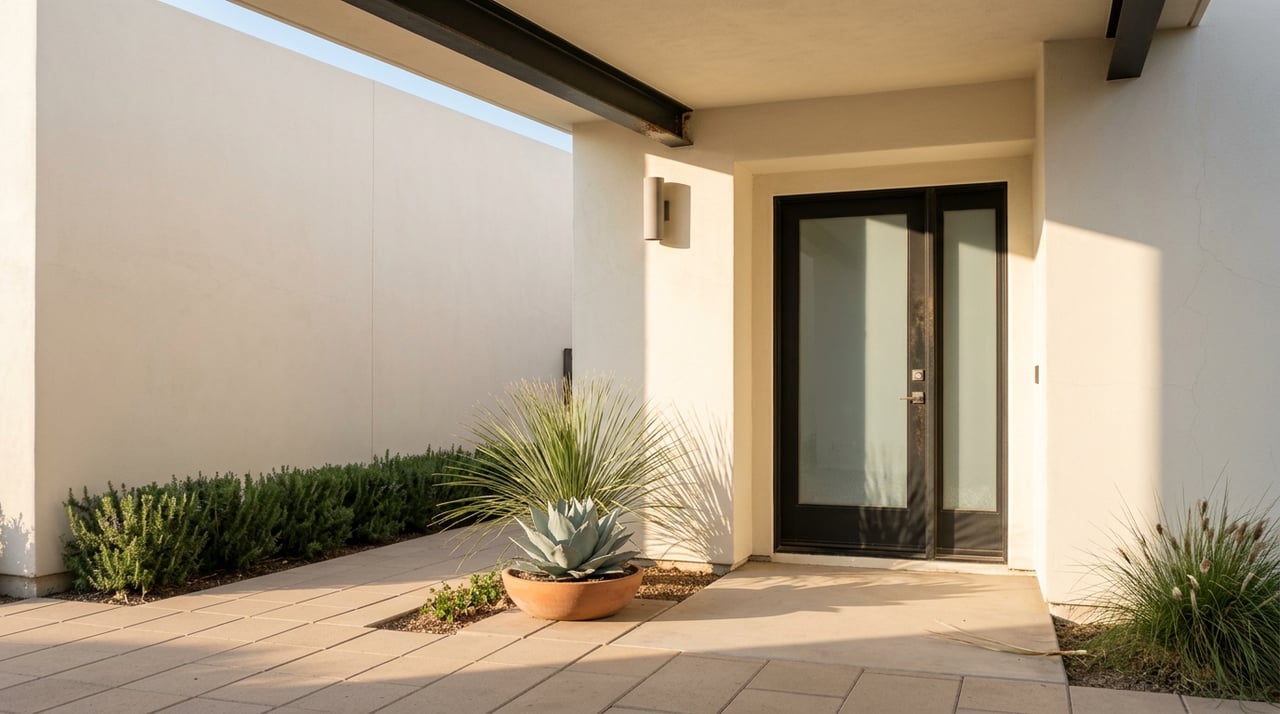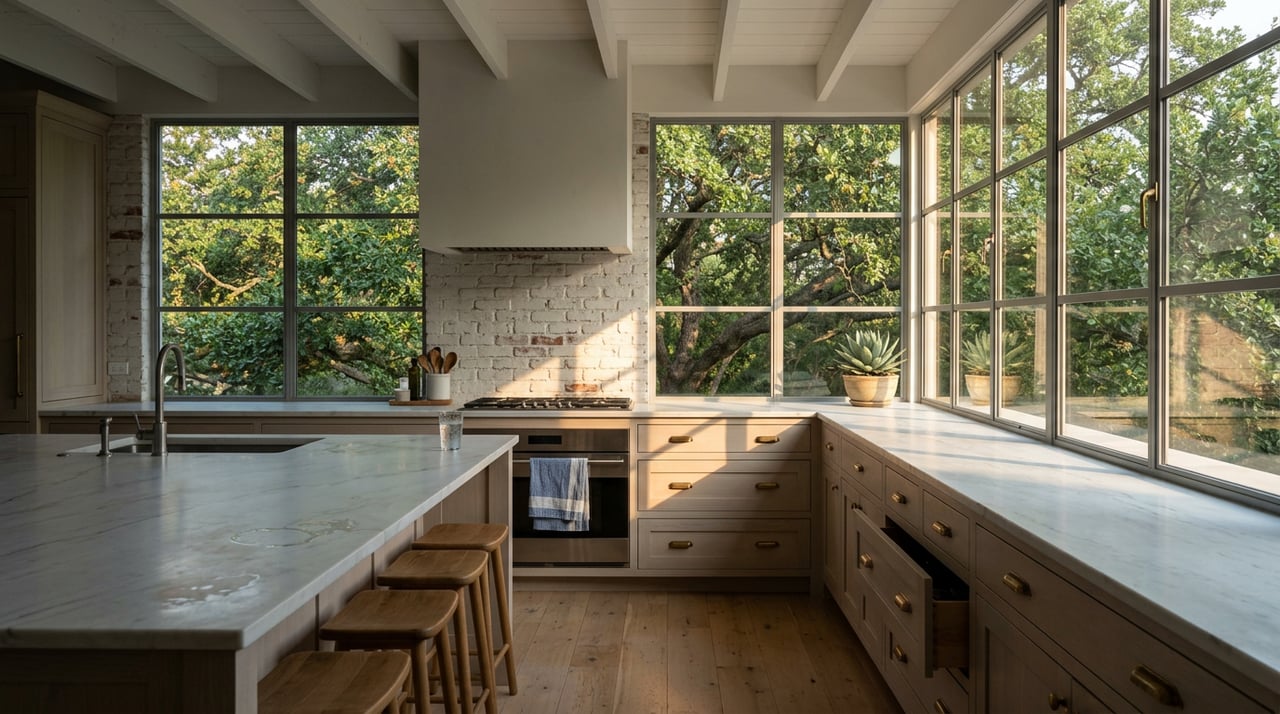
"They are not located on separate legal lots and have not been approved through a subdivision, lot split, condominium plat, rezoning process, or other lawful land division process recognized by the City." That sentence came from the City of Phoenix, in a letter addressed to the listing agent for a property at the corner of 2nd Street and Bethany Home Road. The letter was responding to something that had already happened: a casita, built as an accessory dwelling unit on a single-family lot, had been listed for sale on the open market as its own separate home.
Neighbors in North Central Phoenix had already given the four structures on that corner a nickname before the city ever got involved. They call it the monopoly houses, a nod to how the oversized, boxy new construction looks stacked on two lots that used to hold one home. The nickname is casual. What it points to is not. A buyer who was scrolling listings in February 2026 could have found a home on that corner and, a few clicks later, found what looked like a second, separate home for sale at the same address. Only one of those two listings represented a legal, sellable parcel.
What Actually Happened on the Ground
The story starts in 2024. A 20,000 square-foot lot at 134 E. Bethany Home Road was divided into two 10,000 square-foot lots, recorded with the Maricopa County Assessor and Recorder. According to the North Central Phoenix Homeowners Association, no city lot-split approval, subdivision approval, or rezoning entitlement was ever obtained to go with that county recording. A primary home and an accessory dwelling unit were then built on each of the two lots, four structures total, each with its own pool.
Two of those four structures were permitted as ADUs. Under Arizona's 2024 accessory dwelling unit law, cities with more than 75,000 residents cannot cap an ADU below 1,000 square feet. The two ADUs on this corner came in at more than double that figure, according to the HOA's formal complaint to the city. The homeowners association also pointed to a specific chain of causes: the state law that made ADUs easier to build, mistakes made during the city's own permitting review, and a developer working from out of state who pushed the design further than the neighborhood, and arguably the ordinance, anticipated.
None of that alone put a buyer at risk. Plenty of large lots in this neighborhood now carry a primary home and a casita, built entirely within the rules. The risk showed up when marketing caught up to construction.
The Week the Listings Split
On February 25, 2026, "coming soon" listings appeared on the MLS advertising the primary home at 6010 N. 2nd Street and the ADU at 6008 N. 2nd Street as two separate homes for sale. The ADU listing carried its own parcel number. According to the homeowners association, that number did not exist in the Maricopa County Assessor's records.
The response moved fast, and the timeline is worth walking through because it shows exactly how a buyer's protection actually works in practice, not in theory.
| Date | What happened |
|---|---|
| Feb 25, 2026 | Separate MLS listings post for the primary home and the ADU, each with its own address and parcel number |
| Feb 27, 2026 | NCPHA and a second neighborhood group, MTENA, meet with the city council office and the city manager over the listings |
| Feb 27, 2026 | The Arizona Department of Real Estate is contacted about the listing's parcel number |
| Feb 27, 2026 (evening) | A single, corrected MLS listing replaces the two separate ones, covering the home and ADU as one property on one parcel |
Two days. That is how long it took for a coordinated response from a neighborhood association, a council office, and a state regulator to correct a listing that had briefly offered a state-permitted casita as if it were a freestanding, separately deeded home. The city's own letter to the listing agent made the underlying fact plain: city records show the ADU and primary home approved as accessory structures on a single lot, not as two separately titled properties.
Why the Law Made This Possible, and Why It Didn't Make It Legal
Arizona's House Bill 2720, the ADU law signed in 2024 and effective January 1, 2025, requires cities above 75,000 residents to allow at least one attached and one detached accessory dwelling unit on any single-family lot, as a matter of right. Cities can no longer require a public hearing or discretionary approval for an ADU that meets the state's minimum standards. A companion bill, HB 2928, extended similar rights to unincorporated county land starting January 1, 2026.
What neither law does is create a shortcut for splitting one parcel into two and selling the pieces separately. A lot split in Phoenix still requires the city's own subdivision or lot-split review, something distinct from simply recording a division with the county assessor. The 2nd Street property appears to have skipped that city-level step entirely in 2024, according to the homeowners association's complaint, even as the county recording went through.
That gap between what the state now allows you to build and what the city requires you to legally divide is the exact seam this case fell into. The ADU law made the construction straightforward. It said nothing about the sale.
What This Means If You're Looking at an ADU Listing in North Central Phoenix
Casitas are common enough in this neighborhood now that a listing advertising a main house and a separate accessory unit is not unusual. Most of them are built and marketed correctly. The 2nd Street case is useful precisely because it shows what the exception looks like, and what to check before you assume a listing is what it says it is.
A few things worth confirming before you write an offer on a property with an ADU, especially one marketed with any language suggesting the main house and the casita could be purchased or valued separately:
- Pull the parcel number on the listing and compare it against the Maricopa County Assessor's public records for that address. A mismatch, or a number that doesn't return a result, is not a paperwork delay. It's a signal to stop and ask questions before continuing.
- Ask your agent or title company whether the lot has gone through a city-approved subdivision, lot split, or condominium plat, not just a county recording. Those are two different processes, and only the city's approval makes a division legally sellable as separate parcels.
- If square footage on an ADU looks unusually large for a casita, ask when and how it was permitted. The state's ADU statute sets a floor cities can't go below, not a design template, and larger accessory structures deserve a second look at their permitting history.
- Remember that a title company and a good real estate attorney exist for exactly this kind of verification. The cost of confirming a legal lot split before closing is small next to the cost of discovering afterward that it wasn't one.
The neighborhood associations that caught this one, NCPHA and MTENA, are active and watching. That's a genuine asset for anyone buying here. It doesn't replace doing your own homework on the parcel before you're under contract.
A Couple of Questions Worth Settling Early
Does this mean ADUs are a red flag in North Central Phoenix? No. Most casitas in the neighborhood were built and are marketed correctly, and they add real flexibility for multigenerational living or rental income. The lesson from this case is narrower: verify that a listing's parcel description matches what the county and city actually have on file, especially if a home and its ADU are being marketed as if they could be sold or valued as separate units.
If I already own a home with an ADU here, does this affect my resale? Only if your lot split or ADU permitting has the same gap this one did. A straightforward casita built under a single, correctly permitted parcel is not affected by this case at all. If you're unsure how your ADU was permitted, your city planning file and county parcel record will show you exactly what's on the books.
North Central Phoenix rewards buyers who ask the right question at the right moment, and this corner is a clear example of why. If you're circling a listing here with a casita attached, or you're weighing whether adding one to your own lot makes sense, The Caniglia Group can walk the parcel history with you before you're under contract. Schedule a free consultation and let's look at what's actually on file, not just what's on the flyer.