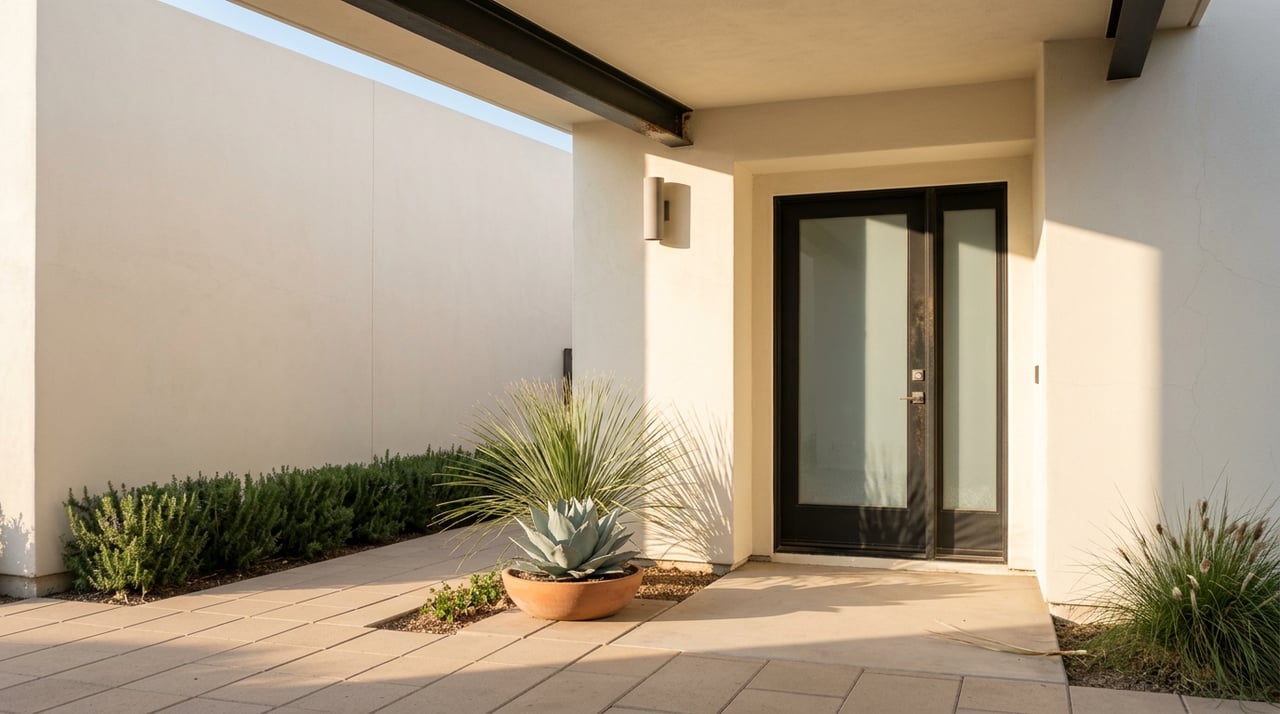
The largest condo in Old Town Scottsdale went back on the market this year with a fresh remodel, Belgian doors, Italian flooring, and a $6.5 million ask on 5,119 square feet at the Optima Camelview Village. The math works out to roughly $1,270 a square foot. What makes the listing worth a second look isn't the price. It's the paper trail behind it. The unit's original owner held it for two decades before an LLC bought it off market last year for more than $2.5 million and quietly renovated it without ever putting it on the open resale circuit. The listing agent, Jason Glimcher of Compass, told the Phoenix Business Journal that in Old Town's ultra-luxury tier, buyers want something special and will pay for it.
Here's what that penthouse and the $315,000 one-bedroom two buildings over have in common. They both sit inside a homeowners association, and both are governed by the exact same Arizona statute that dictates what a seller has to disclose before closing. In four weeks, that statute changes, and the change matters more in Old Town than almost anywhere else in Scottsdale.
A Statute That Doesn't Care About the Zeros
Arizona's resale disclosure law, A.R.S. 33-1260 for condominiums, has never required an association to fund its reserves adequately or even conduct a reserve study. What it requires is honesty about where things stand. Every time a unit changes hands, the seller or the association has to tell the buyer how much money sits in reserve, whether any special assessments are pending, and whether litigation is attached to the building.
That disclosure obligation lands differently depending on which Old Town building you're in. As of June 2026, the submarket's median sale price sat near $702,000, well below North Scottsdale's roughly $1.27 million and Paradise Valley's roughly $3.4 million. But the more telling number is who's buying. Cash purchases run close to 42 percent of Old Town transactions, well above the 30 to 35 percent typical for Scottsdale overall, because second-home and investment buyers dominate the high-rise inventory here. Cash buyers read HOA financials the way other buyers read school ratings. They don't need financing approval, so nothing stops them from walking away the moment a reserve study looks thin.
That scrutiny already shows up in the numbers. Sale-to-list ratios in Old Town slipped below 96 percent for the first time in fourteen months as of the June 2026 reporting period, and condo units are regularly closing 4 to 9 percent under list once buyers vet HOA dues, pending special assessments, and short-term rental restrictions building by building. The discount isn't uniform. It's the market pricing in exactly how confident buyers feel about each association's paperwork.
What the Packet Actually Gains on September 12
Governor Hobbs signed House Bill 2397 in June 2026, and it takes effect September 12, amending both the condominium disclosure statute and its planned-community counterpart. The bill text expands what has to land in a buyer's hands before closing. According to the Senate's own summary of the amended bill, the disclosure packet now has to include:
- Board meeting minutes, not just financial statements
- A statement about declarant control, relevant for newer or converted buildings
- Any outstanding and unresolved violation notices tied to the unit
- A signed acknowledgment from the purchaser that the association exists and governs the property
- Any special assessment approved but not yet formally levied within the previous four months
Associations can still charge up to $400 to assemble and deliver the packet, and electronic delivery is now explicitly allowed, which should speed things along for buildings that used to mail paper copies.
The Grace Period Was the Point
Here's the part that actually changes the transaction, not just the paperwork. Under the amended statute, the disclosure clock now starts the moment a purchase offer is accepted, not whenever a buyer or their agent thinks to formally request the packet. For associations under 50 units, the seller has ten days from acceptance to deliver it. For larger associations, the ten days start from written notice of the pending sale.
That sounds like a technical scheduling tweak. It isn't. It closes the window that let a seller, or a board sitting on a known problem, quietly work things out before a buyer's attorney ever saw the financials. And the bill raises the stakes for getting it wrong. A purchaser or seller damaged by a failure to disclose can now pursue remedies including attorney fees, with liability tied to whether the failure was knowing or reckless rather than an honest paperwork gap.
| Mechanic | Before September 12 | After September 12 |
|---|---|---|
| Disclosure trigger | Tied to a request for the packet | Tied automatically to offer acceptance |
| Delivery method | Primarily paper | Electronic transmission or paper, seller's choice |
| Liability for errors | General disclosure duty | Knowing or reckless conduct exposes seller or association to damages and attorney fees |
For a building with a genuinely funded reserve account, this changes almost nothing. The packet arrives a little faster, in a cleaner format, and the seller looks good in escrow because the numbers were always going to look good. For a building where the board has been deferring a roof or elevator replacement to keep dues low, the automatic clock means that story surfaces the day a contract gets signed instead of whenever someone gets around to asking. There is no longer a comfortable gap between accepting an offer and having the financial reality on the table.
Condos Already Play by a Tighter Book
This isn't the first time Arizona has treated condominiums differently from single-family HOA neighborhoods. A separate 2025 change raised the foreclosure threshold for planned communities to 18 months delinquent or $10,000 owed before a lien foreclosure can proceed. Condominiums were left out of that change. They still operate under the older 12-month or $1,200 threshold. Lawmakers have been moving planned-community rules toward more owner protection while leaving condo associations under a stricter, faster-moving framework. HB 2397's disclosure expansion fits the same pattern. Condo buyers get more information, faster, because condo ownership already carries more shared financial exposure than owning a detached house with a modest HOA.
What This Means If You're Listing or Circling a Building Right Now
If you own a unit in Optima Camelview Village, Scottsdale Waterfront, The Mark, Safari Drive, or any other Old Town building and you're weighing a fall listing, the practical move is to get ahead of the clock rather than react to it.
- Ask your board or management company for the current reserve study and the last twelve months of financial statements before you sign a listing agreement, not after you accept an offer.
- Confirm in writing whether any special assessment has been approved in the last four months, since that now has to be disclosed even if it hasn't been formally levied yet.
- If your building self-manages or uses a smaller management company, ask now how quickly they can assemble and electronically transmit a full packet, since the ten-day window starts the day you accept an offer, not the day you ask.
If you're buying, the same documents that used to arrive after a polite request now arrive as a matter of course within ten days of your offer being accepted. Use that window. Old Town continues to draw fresh investment, the AC Hotel Old Town opened in February 2026 and condo conversion activity is ongoing, which keeps retail energy and resale demand healthy. None of that changes the fact that two buildings a block apart can carry very different reserve pictures, and the new law simply makes sure you see that difference before you're deep into an inspection period.
FAQ
Does this apply if I'm already under contract before September 12? The amended statute applies based on when the law takes effect, so contracts accepted before September 12 fall under the prior rules while those signed after should follow the new packet requirements and timeline.
Does this change anything about condo financing or lender warrantability? The bill addresses disclosure content and delivery, not lending standards directly, though lenders reviewing an association's financial health will now have access to a more complete packet earlier in the process.
Is this the same law that changed HOA foreclosure rules? No. The foreclosure threshold changes for planned communities took effect in September 2025 under separate legislation. HB 2397 is a distinct 2026 law focused specifically on resale disclosure content and timing.
If you're weighing a sale in an Old Town building this fall, or trying to make sense of what a specific association's financials actually mean for your offer, The Caniglia Group knows these buildings at the HOA level, not just the ZIP code level. Schedule a free consultation and let's look at your building's numbers together before the clock starts.