Ten homes in Paradise Valley closed above $10 million in the first eight weeks of 2026. In the same window, active inventory in the $2 to $5 million tier climbed to a level the town has not seen in a year and a half. Both facts are true, and both belong to the same ZIP code. Neither, on its own, is the market.
Buyers comparing 85253 to Arcadia or North Scottsdale usually arrive with one number in hand: the median. As of June 2026, that number sits near $5.25 million on the list side and around $4.6 to $5.2 million on the sale side depending on which window you read. It is a useful headline and a poor compass. Paradise Valley in mid-2026 is behaving like two markets stacked on top of each other, and the negotiation you should expect depends entirely on which one your target property lives in.
Two markets under one ZIP
The town uses a single ZIP code, 85253, and the town's one-acre minimum lot rule keeps the housing stock uniformly low-density. That surface uniformity is what makes the split underneath so easy to miss.
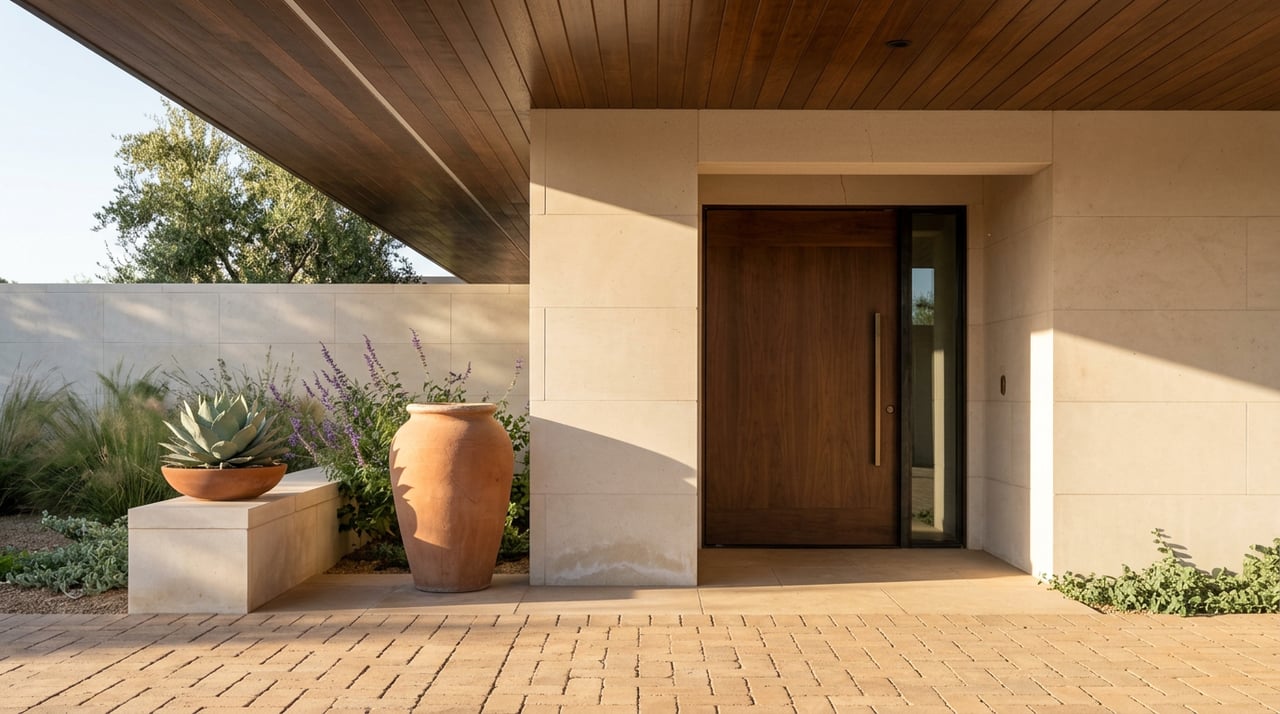
At the top, the ultra-luxury tier is not just holding, it is setting records. A modern estate at 5641 North Casa Blanca Drive sold for $20.9 million in an all-cash deal, at roughly $1,798 per square foot. Weeks earlier, a custom home at 7050 N. 39th Place traded for $12.25 million cash, setting a per-square-foot resale record for the town at $1,938. Local reporting documented three all-cash closings at $20M+ within a ten-day span in early March 2026, with at least ten $10M+ sales year to date.
Below the trophy tier, the picture looks nothing like that. Inventory jumped 42% month-over-month to 431 active listings, pushing months of supply to 10.3 and shifting Paradise Valley firmly toward buyer-favorable territory, the strongest buyer position in 85253 in 18 months. Days on market climbed to 121 in May 2026 versus 97 in April.
| Tier | Behavior in mid-2026 | Buyer leverage |
|---|---|---|
| $10M+ trophy | Cash-dominant, decisive, record $/sf | Minimal |
| $5M–$10M | Selective, quality-driven, sale-to-list mid-90s | Moderate |
| $2M–$5M | Rising inventory, longer DOM, price cuts | Meaningful |
| Land-only teardowns | $2M–$3M dirt in prime pockets | Depends on zoning path |
Read the median without that table, and you will overpay in the soft tier or underbid the strong one.
The number that gives it away
Look at price per square foot, not price. Per-square-foot values pushed to $987 in May 2026, up from $951 in April, with luxury-grade construction on premium hillside lots commanding $1,400 to $2,000 per square foot at the trophy end. Compare that to the closing prints in the older, financed segment, where homes selling over $3 million with a build date of 2019 or earlier and between 3,000 and 8,000 square feet closed at $795.80 per foot from April 8 to June 8, 2026, a drop of nearly 5% from April 2024.
That is roughly a 2.4x spread between the softest and strongest ends of the same market, in the same quarter, inside the same one-square-code town. Median price cannot see that spread. Price per square foot, sorted by build year and pocket, can.
The cash story explains most of the top end. Chris Karas of Compass Arizona noted that Arizona's tax structure remains appealing to wealthy buyers leaving high-tax states, many of whom initially skipped the state and are now settling here. Chicago homebuyers searched to move into Paradise Valley more than any other metro, followed by Seattle and Los Angeles. Those buyers are largely rate-insensitive. Freddie Mac's weekly survey showed the 30-year average near 6.0% in early March 2026, and while luxury buyers are often less rate-sensitive, rates can still affect the financed pool and appraisal dynamics.
Why the median is a bad compass here
Paradise Valley closes a small number of homes each month, which means a handful of trophy trades can drag the median around in ways that mean nothing to a buyer shopping the middle of the market. While Scottsdale and Phoenix close 800 to 1,000 single-family homes per month each, Paradise Valley closes roughly 40 to 60, but each transaction carries 7 to 10 times the typical Valley price.
The practical implication: read six to twelve month windows for your price band, and price against like-kind comps in your micro-pocket rather than a town-wide median. A single $30M+ close on Casa Blanca does not tell you anything useful about a 1988-vintage 5,000-square-foot flat-lot home two miles north.
The teardown math, and the rule most buyers miss
Buyers priced out of turnkey trophy inventory often gravitate toward teardowns. The math can pencil. Tear-down opportunities exist at the $2M to $3M land-only price point, and a teardown plus a $5M to $7M custom build still produces a final asset around $8M to $12M, well below the $15M+ trophy tier.
The rule most out-of-market buyers do not know about is buried in the town's zoning code, and it can rewrite a project's economics before demolition day.
- The pre-1991 setback rule. On certain R-175 parcels, standards change depending on whether a primary building existed before June 13, 1991. If a qualifying older primary building exists, the front setback can be 40 feet, while a lot without that older building may face a 100-foot front setback. Tear down the wrong house and you can lose sixty feet of buildable frontage.
- The 50% rule for older-home expansions. Paradise Valley's interpretation for nonconforming structures notes that if the affected roof area or exterior wall area of a nonconforming portion exceeds 50%, that portion may need to meet setback requirements. That can change the cost and feasibility of turning an older home into something close to new construction.
- Hillside review. If your lot is in the mapped Hillside Development Area or has a natural slope of 10 percent or more under the building site, the Hillside Building Committee reviews the work before any permit is issued, the submittals are engineered, and the Town requires financial assurance.
- Layered permitting. A single project can touch four different layers of rules at once: the Town runs its own permit process for demolition, grading, and hillside review, Maricopa County governs dust and asbestos, the Town protects its native desert plants and natural washes on every lot, and on a sloped lot the Hillside Building Committee reviews the work before a permit is ever issued.
Any of the four can turn a "land-value" purchase into a longer, more expensive project than the listing sheet suggests. The right pre-offer question is not what the house is worth; it is what the parcel will legally let you build.
"Lots of developers have their eye on that street, waiting to pounce when a home is listed, and many homeowners receive offers before their properties ever reach the market." — Katrina Barrett, on the Casa Blanca corridor, quoted in reporting on the $33.5 million spec sale at 5738 Casa Blanca that set the Arizona sale price record.
How to read comps by micro-pocket
The town's single ZIP flattens a set of very different sub-markets. A short field guide:
- Casa Blanca corridor. Trophy tier. Cash. Spec builders. Off-market activity. Twelve homes on Casa Blanca Drive have sold for more than $8 million in the past three years.
- Camelback Country Club Estates. Anchored on the Tatum Boulevard corridor around the historic Paradise Valley Country Club, with 1-acre lots, mature landscaping, and inventory ranging from original 1960s ranch estates through significant new construction custom builds.
- Cheney corridor. Central, flat-lot, walkable, with 1950s and 1960s originals that often sell as teardowns for new construction custom builds.
- Clearwater Hills, Finisterre, Judson Estates, Paradise Reserve, Azure at Ritz-Carlton. Guard-gated enclaves that carry HOA dues funding private gate staffing and shared landscape maintenance. Azure at Ritz-Carlton and Paradise Reserve offer lock-and-leave configurations for second-home buyers, and rising inventory means more selection than has existed in over a year.
- Camelback and Mummy Mountain hillside lots. Elevation premiums: homes above 1,500 feet on Camelback routinely command higher price-per-square-foot figures than flatland comparables, with south-facing lots and view corridors trading at measurable premiums. Also the highest permitting complexity.
A comp from the Cheney corridor tells you almost nothing about a Casa Blanca listing, and vice versa. The town's assessor and permit records live at the Town of Paradise Valley municipal site, which is the right primary source when a listing hinges on zoning designation or a hillside call.
What this means if you are writing an offer this summer
If your target is in the $2M to $5M tier, you are shopping into a genuine buyer's window. Write strategic offers, do not chase list price. On the sell side, list medians pulled back to $5.25M from $5.55M in April, but $/sq ft pushed to $987, meaning the right home in the right neighborhood is still pricing strong. Sale-to-list ratios in the mid-90s mean disciplined pricing usually gets a disciplined response.
If your target is $10M and up, treat the market as an information game. Off-market inventory, agent-to-agent networks, and pre-listing conversations are moving a meaningful share of trophy stock before anything hits a portal. Speed and relationships matter more than a marginal price move.
If your target is a teardown, order the zoning read before you order the inspection. The delta between a lot that carries the pre-1991 front-setback grandfather and one that does not can be worth more than the house sitting on it.
FAQ
Is Paradise Valley in a correction? The $2M–$5M tier is softening on inventory and DOM, while the $10M+ tier is setting per-square-foot records. Calling the town-wide market one direction misreads it. The May-to-April jump in days on market reflects seasonal cooling heading into summer rather than structural weakness.
How much of the town runs under HOAs? Most of Paradise Valley does not operate under HOAs. The town's one-acre minimum lot rule and strict residential zoning code replace much of the role HOAs play in other Valley cities. The guard-gated enclaves are the exception.
Are appraisals a risk on financed purchases? They can be, especially where recent comps are dominated by cash sales at outsized per-foot prices. A significant portion of recent sales closed without financing, particularly out-of-state migration buyers from California and Illinois who avoid jumbo loan appraisal risk by paying cash. A financed buyer competing in that pool should plan the contract around appraisal, not against it.
If you are weighing an offer in 85253 this summer, or thinking about whether your own Paradise Valley home lands in the strong tier or the soft one, The Caniglia Group can walk the comps at the pocket level and map the zoning read before you write. Schedule a Free Consultation and we will build the plan around your specific parcel, not the town-wide median.